


Most homes that feel small are not actually short on space. They feel small because something in the room is quietly working against them. It is rarely one big mistake. More often, it is a collection of little choices that slowly add weight, block light, or make the room feel closed in without anyone noticing when it happened.
People usually assume they need to knock down a wall or move houses to fix this feeling. In reality, many of these problems come from decorating habits that are easy to fall into and just as easy to correct once you see them clearly.
When Colour Starts to Feel Heavy Instead of Comfortable
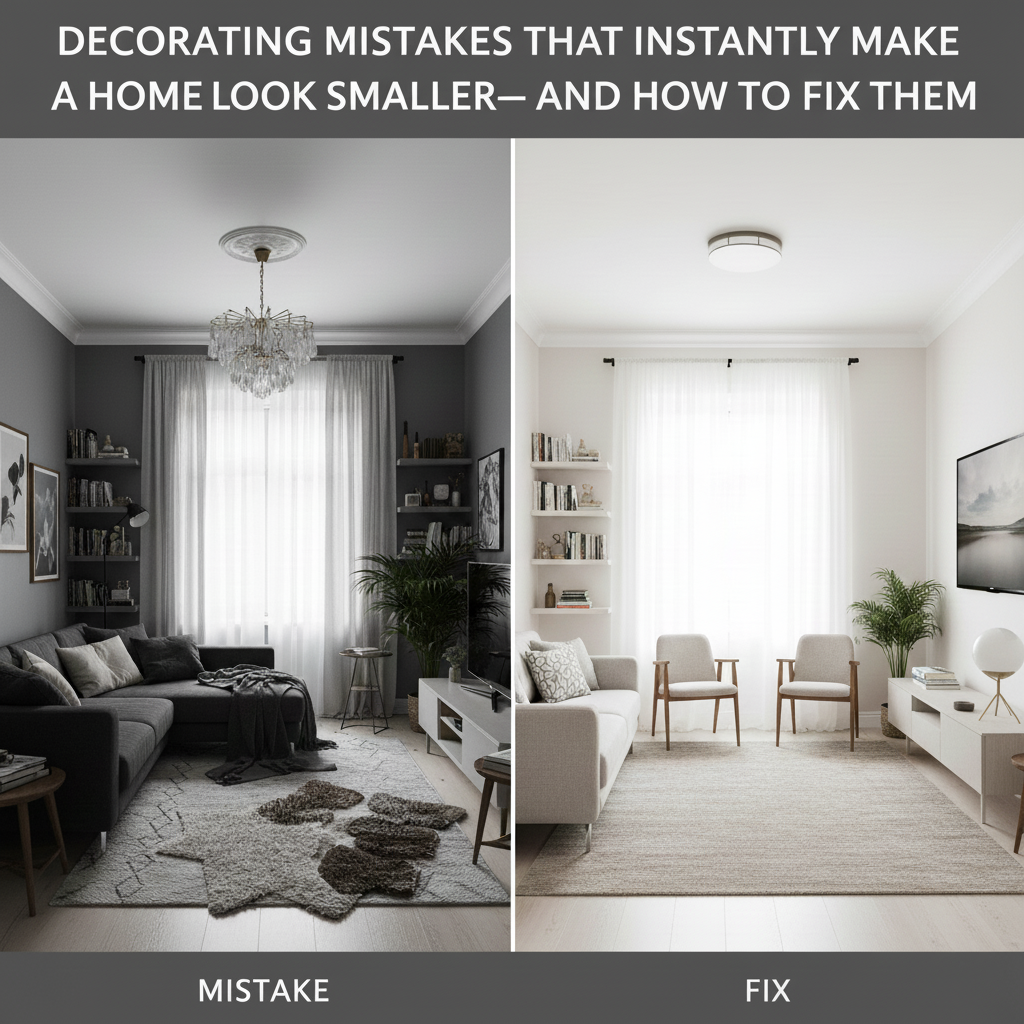
Dark colours have a strong emotional pull. They feel cosy, dramatic, and confident. The problem starts when they are used everywhere without contrast or relief. When walls, floors, and ceilings sit too close in tone, the room loses its edges. Everything feels closer together.
This is especially noticeable in rooms that already lack natural light. Dark paint absorbs what little light comes in, making corners disappear and walls feel closer than they are. Over time, the space can start to feel tight even if the layout has not changed.
This does not mean dark colours are wrong. They simply need breathing room. Lighter walls allow light to move through the space. Soft neutrals create a backdrop that feels open rather than enclosing.
Accent colours work better when they are limited. One wall, a piece of furniture, or a few textiles can add depth without closing in the room. When every surface tries to make a statement, the space loses clarity.
Furniture That Looks Comfortable but Eats the Room Alive
Oversized furniture is one of the most common reasons a room feels smaller than it should. Large sofas, deep armchairs, bulky storage units, or even a sofa bed may look inviting in a showroom, but once they land in a real home, they often take over the space and make it feel cramped
The issue is not comfort. It is proportion. When furniture is too large, it reduces walkways, blocks sightlines, and visually fills the room. Even if you can still move around, the space feels crowded.
Furniture with visible legs helps more than people expect. When the floor is visible underneath, the room feels lighter. Solid bases that sit flat on the floor add visual weight and make rooms feel dense.
Arrangement matters just as much as size. Furniture pushed too close together or pressed hard against every wall leaves no visual pause. A bit of space between pieces allows the room to breathe. It also improves movement and makes the layout feel intentional instead of forced.
Lighting That Quietly Shrinks the Space
Poor lighting does more damage to a room than almost anything else. A single overhead light often creates harsh shadows and leaves corners in darkness. Those dark corners tell your brain that the room ends sooner than it really does.
Layered lighting solves this problem. When light comes from multiple points, the room feels deeper. A floor lamp in a corner, a table lamp near seating, or a wall light along a darker side of the room spreads light evenly.
Rooms feel smaller when light is uneven. Bright in the middle, dark around the edges. That contrast closes the space visually. Filling in those darker areas changes how the room is perceived almost instantly.
Light colour matters too. Extremely white light can feel flat and harsh. Overly yellow light can feel heavy. A balanced warm tone keeps the room comfortable while still allowing details and depth to show.
Too Much Décor and Nowhere for the Eye to Rest
Decorating is personal, which makes this mistake harder to recognise. Over time, shelves fill up, side tables collect objects, and walls slowly disappear behind frames and pieces. Each item may be meaningful, but together they can overwhelm the room.
Clutter reduces visual space. When everything demands attention, nothing stands out. The room feels busy, and that busyness makes it feel smaller.
Editing décor is not about removing personality. It is about letting important pieces breathe. When fewer items are displayed, each one feels more intentional.
Negative space is often misunderstood. It is not emptiness. It is balance. Clear surfaces and open walls give the eye a place to rest, which makes the room feel calmer and more spacious.
Forgetting to Use the Height of the Room
Many rooms feel short because everything sits too low. Low furniture, low art placement, and short curtains all pull the eye downward. The room starts to feel compressed even if the ceiling is standard height.
Curtains are one of the biggest offenders. When they hang just above the window frame, they visually cut the wall in half. Hanging curtains closer to the ceiling makes walls appear taller. Letting them fall all the way to the floor reinforces that height.
Artwork placement has a similar effect. Art hung too low keeps the focus at eye level or below. Raising artwork slightly encourages the eye to travel upward, which creates the illusion of taller walls.
Vertical elements help guide the eye. Tall shelving, narrow cabinets, or even vertical patterns subtly stretch the room upward. Using the full height of the wall instead of concentrating everything in the middle changes how the space feels.
Blocking Light Without Realising It
Natural light is one of the strongest tools for making a home feel open. Blocking it instantly shrinks a space, even if the room is large.
Heavy curtains, dark fabrics, or furniture placed directly in front of windows all interfere with light flow. Over time, rooms become dimmer and feel closed off.
Sheer or lightweight window treatments allow daylight to move through the space. They soften light without stopping it. Keeping windows as unobstructed as possible helps rooms feel connected to the outside.
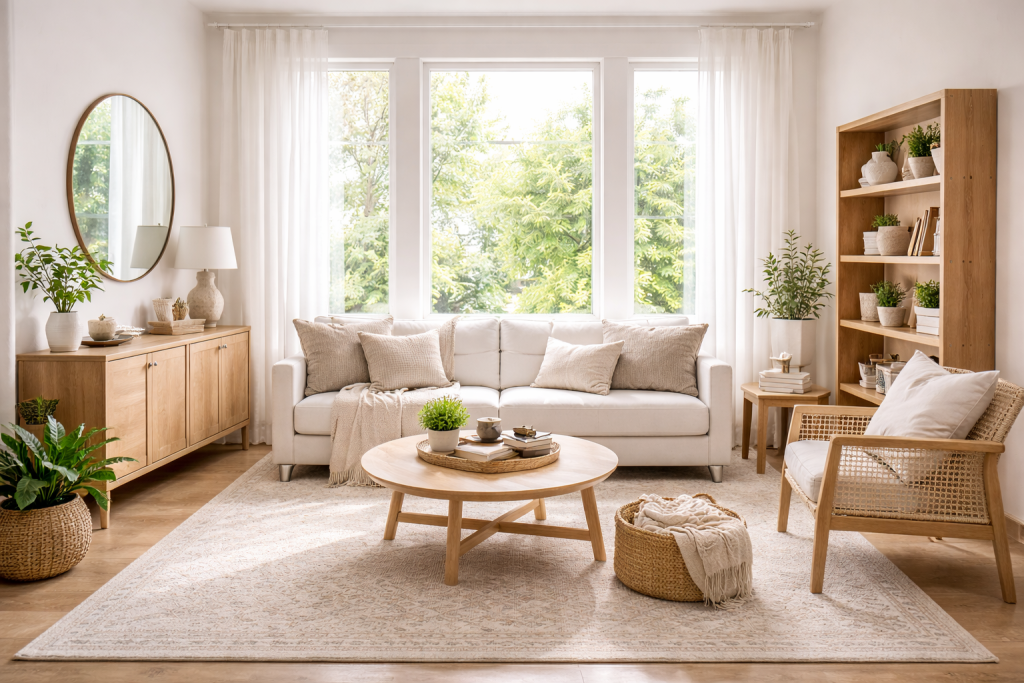
Sightlines matter too. Large furniture placed in the middle of a room or awkward layouts that interrupt flow break the visual path. When the eye cannot move freely, the room feels smaller.
Mirrors help when used carefully. Placed opposite windows or in darker areas, they reflect light and extend the view. A mirror should support the room, not dominate it.
When Everything Competes at Once
One of the biggest reasons homes feel small is that everything is trying to stand out at the same time. Bold colours, strong patterns, heavy furniture, a large book shelf, layered décor, and dramatic lighting all fighting for attention.
When a room has no quiet elements, it feels crowded even if it is tidy. A sense of openness comes from balance, not emptiness.
Choosing one or two focal points allows the rest of the room to support them. This makes the space feel more intentional and easier to read visually.
Final Thoughts
Homes rarely feel small because of their size. They feel small because of decisions that add weight, block light, or compress the space over time.
Fixing these issues does not require major renovations. It requires awareness. Lightening where things feel heavy. Editing where things feel crowded. Raising elements that sit too low. Letting light and space do some of the work.
When a room feels open, it is usually because nothing is fighting for attention. The space is allowed to exist, and that is what makes it feel larger than it actually is.