


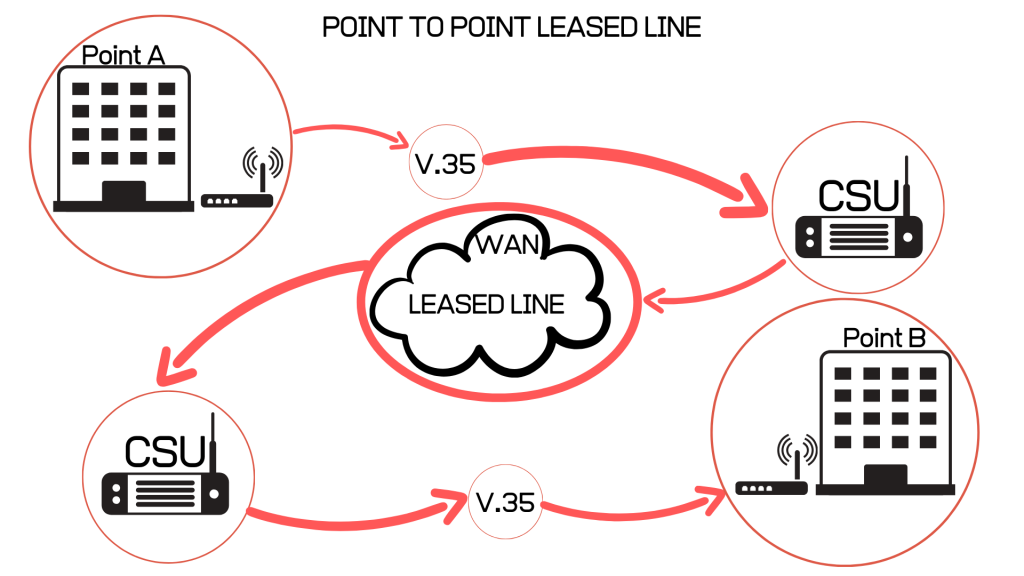
For many organisations, leased line internet is no longer nice to have. It is part of how teams access core systems, serve customers, and keep everyday work moving. When a connection slows or drops, the impact is immediate: calls become unstable, platforms load inconsistently, and shared files stop syncing at the wrong moment. Point-to-point leased lines are designed to reduce that uncertainty by providing a private, fixed link between two locations.
What Is Point-to-Point Leased Line Connectivity
Point-to-point leased line connectivity is a private connection between two defined endpoints, such as a head office and a branch, or an office and a data centre. The key difference from shared services is exclusivity. Bandwidth is reserved for one organisation, so performance is not shaped by demand from other nearby users.
That stability is the reason this connectivity model is used for business-critical links. When teams rely on centralised platforms or shared infrastructure, variable network behaviour creates delays that are difficult to plan around. A point-to-point connection provides a consistent baseline, which makes network performance easier to manage and forecast.
How a Point-to-Point Leased Line Works
A point-to-point leased line is delivered over dedicated infrastructure that links one site to another along a defined route. Data does not compete with local shared demand in the same way it does on broadband services.
Speeds are typically symmetrical, meaning upload and download capacities are aligned. This suits modern workloads where uploading is constant: cloud back-ups, shared drives, hosted tools, remote access, and collaboration platforms. In practical terms, a symmetrical link reduces the “one slow direction” problem that often affects cloud-heavy teams.
Some providers position their business services around this model. Spectra’s leased line internet offering is presented as dedicated connectivity for organisations that need consistent performance rather than shared access.
Why Businesses Choose Leased Line Internet
1. Predictable performance during working hours
Shared connections can slow down when demand rises locally. With leased line internet, capacity remains stable because bandwidth is reserved for the organisation. That consistency supports routine work without teams having to compensate for fluctuating speeds.
2. Symmetric bandwidth that fits cloud usage
Many workflows are now upload-heavy. Files are shared, applications sync continuously, and remote teams connect into central systems. Symmetric speeds support these tasks more evenly, particularly when multiple departments are active at the same time.
3. Clearer control over how bandwidth is used
A private connection gives organisations stronger oversight of usage patterns. Essential platforms can be prioritised so they remain responsive even when demand increases internally. Enterprise-focused services, including those offered by Spectra, are designed with this controlled operating model in mind.
4. Lower sensitivity to external congestion
Congestion is not only about slower download speeds. It is about unpredictability. A dedicated link reduces exposure to sudden drops that affect meetings, support functions, and time-sensitive work.
Where Point-to-Point Leased Lines Are Commonly Used
Point-to-point leased lines are often used to connect locations that need to function as one environment. This includes linking offices to central infrastructure, connecting branches to head-office systems, and supporting access to hosted applications.
They are also common in environments where data transfer is frequent and delay is expensive. If systems are centralised and multiple teams depend on them throughout the day, a predictable link reduces disruption and makes daily operations more stable.
Internet Leased Line Service vs Shared Broadband
An internet leased line service differs from broadband in how capacity is allocated. Broadband is usually shared, so speeds can vary depending on local usage. A leased line reserves bandwidth for one organisation, which supports steady throughput and clearer performance expectations.
Shared broadband can be acceptable for light usage, but the trade-off becomes more visible as reliance on cloud platforms and remote collaboration increases. At that stage, businesses often compare the consistency of leased lines against the variability of shared services, especially when availability affects customer delivery.
Choosing Connectivity Based on Operational Dependence
Point-to-point leased lines tend to become relevant when network performance affects outcomes, not convenience. Hybrid work is one example, where teams need stable access to central tools throughout the day. Centralised infrastructure is another, where applications and data sit in one place and are accessed by multiple sites.
In these settings, inconsistency introduces avoidable delays and increases operational risk. A fixed link reduces uncertainty by keeping capacity stable between locations, which supports smoother workflows and more reliable access to shared systems.
Conclusion
Point-to-point leased lines provide a private connection between two locations, with bandwidth reserved for the organisation using it. This structure supports predictable performance, symmetrical speeds, and stronger control over network behaviour. As businesses become more digitally dependent, shared connections often struggle to provide the same level of consistency.
A private setup using leased line connectivity, delivered through a dedicated internet leased line service, offers a stable foundation for modern operations. For organisations evaluating providers, enterprise-focused leased line offerings, such as those offered by Spectra, align well with the need for dependable performance without the limitations of shared networks.