


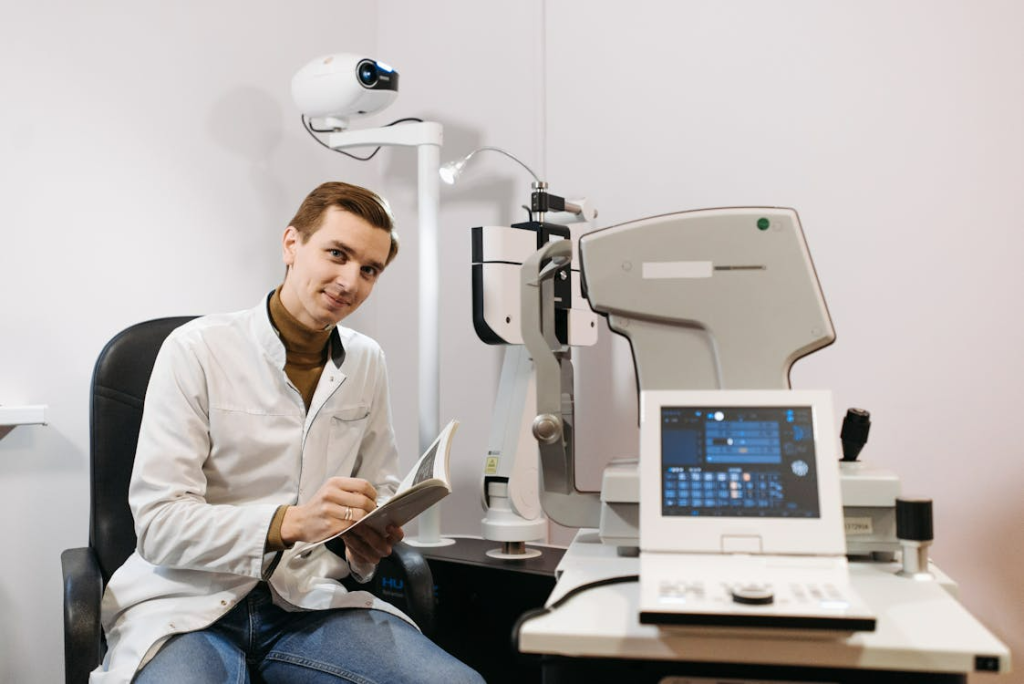
As we get older, the changes that take place in our physical well-being are inevitable. Often, our eyes are usually the first to feel the impact of these changes. The decline in our eyesight has become a source of loss of freedom to many elderly people.
For instance, it has become a chore to read an old favorite book, it has become unsafe to drive at night, or it has become impossible to see the faces of our loved ones across the room. Although the decline in our eyesight has always been viewed as a natural and unavoidable part of our lives, things have changed. With the advancement of medical science, our eyesight has been given advanced medical treatment to restore our eyesight and greatly improve our lives as seniors.
The Conditions that Affect the Eyes of the Elderly
In order to understand the advanced medical treatment options now available to our eyesight, it is important to understand the conditions being targeted by these medical breakthroughs. There are various medical conditions that affect our eyesight as seniors. For instance, we may be diagnosed with a condition known as cataracts. This occurs when the lens of our eye becomes cloudy, just like looking at a window covered with a fog. Thankfully, cataract treatment in Los Angeles is continually improving.
Glaucoma is another medical condition that creates a major threat for the eyes of the elderly, as it affects the optic nerve of the eye, causing its deterioration due to increased intraocular pressure, which is also called the “silent thief of sight” because it takes away peripheral vision without any prior intimation. Moreover, the eyes of the elderly also suffer from Age-Related Macular Degeneration, which affects the central part of the eye, making it difficult for a person to see the road while driving a car.
Breakthroughs in Surgical Options
For a condition like cataract, surgery is no longer an ordeal but a routine, highly effective process that can now be carried out quickly on an outpatient basis under local anesthesia, replacing a natural lens with an artificial lens.
The advancements that have been made in technology have also revolutionized intraocular lenses, which, earlier, could only correct lens clouding but still necessitated wearing glasses by the patient. Today, however, intraocular lenses can treat astigmatism, nearsightedness, and farsightedness simultaneously, while “multifocal” intraocular lenses enable a person to see at all distances, thereby making it possible for a person to avoid wearing glasses or contact lenses at all.
Moreover, with the help of laser technology, precise incisions ensure that healing takes place quickly with little pain, thereby allowing a person to return to his or her normal activities in no time.
Non-Invasive Advanced Therapies
There are other ways of restoring eyesight to its optimal state other than surgery. For those suffering from glaucoma or macular degeneration, there is new hope of restoring or improving their condition through the use of new advances in the use of pharmaceuticals. There is now a new, revolutionary treatment for those suffering from wet macular degeneration, whereby injections of anti-VEGF are used to prevent further degeneration of their remaining eyesight or even improve it.
For glaucoma, it is no longer just a matter of monitoring pressure in the eye; there are now new types of eye drops that can treat glaucoma much more effectively without adverse effects on the rest of the body. For those with glaucoma who have difficulty using eye drops and placing them in their eyes daily, there is now a new drug delivery system that may be implanted directly into the eye to release medication over time.
The Lifestyle Impact of Better Sight
Regaining one’s sight is not just about passing a sight test. It’s about independence. It’s about being mentally sound. Seniors who have sight are much less likely to fall and hurt themselves. Falling is one of the biggest causes of injury among seniors. With sight, seniors know how to get from point A to point B. Is it by going up the staircase? Is it by going down to the shop?
However, there is also a social component to vision that should not be ignored. Seniors who are unable to see may become reclusive if their condition does not permit them to participate in their favorite activities. This may be anything from their favorite hobby, such as golfing, to their favorite television program.
Take the Next Step Towards Clarity
You do not have to resign yourself to a world that is gray and fuzzy. The advances in eye care mean that many of the problems that plague seniors are not as difficult as they once were. The tool that you have at your disposal is screenings. By using this tool, you will be able to have your problems worked out by a specialist. If you have noticed changes in your vision, or if it has been over one year since your last screening, speak with a specialist today. It may be the answer to a clearer vision for the rest of your days!