


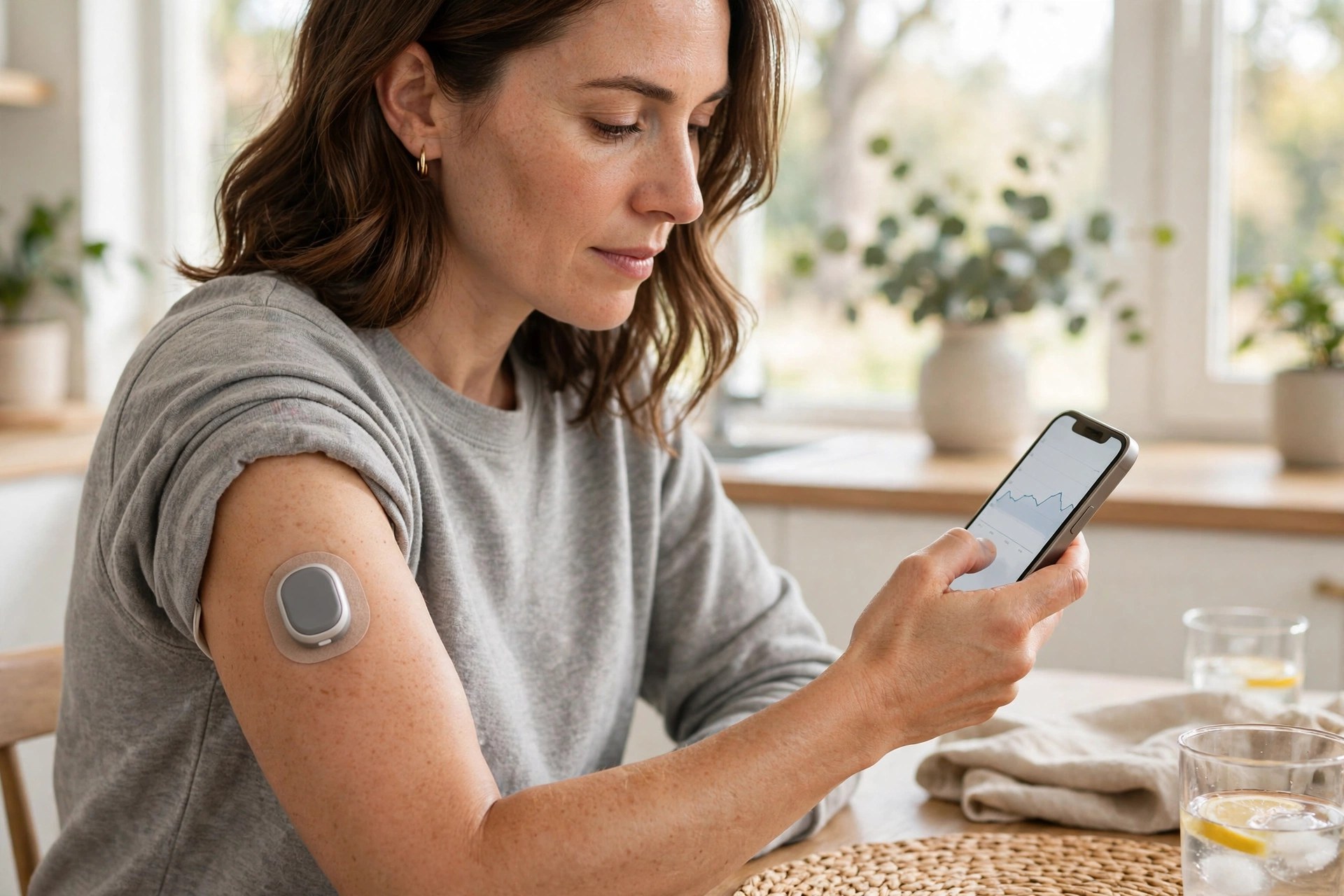
Continuous glucose monitors, the small wearable sensors that track blood sugar around the clock, could soon become a standard tool for far more people with type 2 diabetes. The largest clinical trial of its kind, published in the New England Journal of Medicine, has found that adults with type 2 diabetes who do not use insulin spent approximately five more hours a day in their target blood sugar range when they used a continuous glucose monitor, compared with standard care.
Why This Trial Matters
Until now, glucose monitors have been prescribed mainly to people who manage their diabetes with insulin, where the risk of dangerous low blood sugar makes constant readings especially valuable. Millions of other people with type 2 diabetes rely instead on occasional finger-prick tests, which capture only a few snapshots of blood sugar each day and miss the peaks after meals and the dips overnight entirely. Whether giving those patients a continuous view of their glucose would actually change outcomes has been an open and hotly debated question.
This trial was designed to answer it at scale. Participants who wore the sensors could see, in real time, how a particular meal, a walk after dinner or a stressful day moved their glucose up or down. Researchers say that feedback loop, rather than any single reading, is what appears to drive the improvement: people adjust their behaviour in small, sustainable ways when they can immediately see the effect of their choices.
Five More Hours in Range
The headline figure, roughly five additional hours a day spent within the target glucose range, is clinically meaningful. Time in range has become one of the most closely watched measures in diabetes care because it reflects the whole day rather than a single average, and steadier glucose is associated over time with a lower risk of complications affecting the eyes, kidneys, nerves and heart. Participants using the monitors also saw improvements without adding insulin, an outcome that matters to the many patients who hope to manage the condition for as long as possible with lifestyle measures and oral medication.
Just as importantly, the benefits appeared in a group that closely resembles the wider type 2 diabetes population, not a narrow slice of highly motivated volunteers. That breadth is a large part of why clinicians are paying attention to this study rather than treating it as one more small, promising pilot.
What It Could Mean for Everyday Care
If guidelines and insurers respond to the evidence, access to glucose monitors could widen considerably. The American Diabetes Association already recognises continuous monitoring as a valuable tool, and a trial of this size gives guideline committees fresh, rigorous data to weigh at their next updates. Wider coverage would still depend on cost negotiations, since sensors are replaced every ten to fourteen days and the expense adds up over a year of continuous use.
There are practical hurdles too. Clinics need time and training to review the flood of data the devices generate, and patients need support to interpret trends without becoming anxious about every small fluctuation. Managing blood sugar also sits alongside the many other pressures of living with a chronic condition, from sleep to stress; readers may recognise similar themes in our explainer on how stress affects the body’s hormonal balance.
The Bottom Line
For people with type 2 diabetes who do not use insulin, this trial offers the clearest evidence yet that seeing your glucose continuously, not occasionally, helps keep it steadier for longer each day. It does not replace medication, medical advice or the basics of diet and activity, but it turns those basics into something measurable and personal. Anyone interested in trying a monitor should discuss it with their own clinician, who can judge whether the device fits their treatment plan and what their insurer will cover. As the technology gets cheaper and smaller, the question in diabetes care may shift from who qualifies for a glucose monitor to who, if anyone, should manage without one.